05 July 2024


E-commerce in Vietnam is Southeast Asia’s fastest-growing digital market, generating VND 291.6 trillion (US$11 billion) in the first half of 2026 alone. This explosive 44.1% year-on-year surge is directly driving unprecedented demand for warehouse and logistics real estate. This sustained growth is driven by massive consumer digital adoption and enhanced platform efficiencies.
“Cost advantages alone are not enough. Modern, efficient facilities allow better cost control in the long run.”
— John Campbell, Director of Industrial Services, Savills Vietnam
Source: Savills Japan blog, “Zooming in on Viet Nam’s Logistics Landscape,” September 2025
Market players are aggressively expanding by consolidating into duopolies, shifting to premium malls, and taking control of their own logistics networks. These strategic maneuvers allow platforms to dominate consumer attention while improving fulfillment reliability.
Platform leaders are expanding through a fierce “two-horse race,” with Shopee and TikTok Shop commanding a crushing 97% combined market share.
The market is shifting toward “Mall-ification” as consumers migrate to verified, authorized virtual malls to avoid counterfeit goods. This structural transition prioritizes brand trust and premiumization over unverified, low-cost listings.

Revenue from official malls like Shopee Mall surged by 54% year-over-year. High-value segments above 1 million VND are seeing dramatic revenue spikes in beauty, tech, and home living. Contributing 18% of total platform revenue.
Platforms are capitalizing by pivoting from low-margin mass volume to high-margin brand commissions.
Platforms are transitioning from relying on third-party logistics to aggressively building their own in-house delivery monoliths. This shift stabilizes fulfillment ecosystems during massive sales spikes.
E-commerce in Vietnam is experiencing rapid changes that are fundamentally reshaping user shopping habits and payment methods. From mobile dominance to cross-border expansion, these trends are redefining the digital economy.
Mobile commerce remains absolutely essential for merchants, as users overwhelmingly prefer applications over browsers. In the first six months of 2026, the market recorded VND 291.6 trillion in sales across major platforms, a 44.11% increase.

Notably, sales growth far outpaced volume growth (13.67%), proving the market has moved beyond low-priced goods into a cycle focused on higher average order values. Fashion, accessories, and beauty remain the top search triggers, with “shirt” alone hitting over 15 million searches.
The traditional transactional approach has evolved into an interactive, content-first entertainment experience. An impressive 63% of Vietnamese consumers now participate in livestream shopping, while 53% use shoppable videos.
Valued at approximately USD 4 billion, Vietnam’s live commerce market thrives on high smartphone penetration, with Fashion & Apparel and Beauty & Personal Care leading the way through visual appeal and influencer trends.
Cross-border trade is accelerating, with inbound imports accounting for 55.06% of the B2C market in 2025, and outbound exports forecast to grow at a 22.76% CAGR through 2031.
Vietnam’s mobile payments market climbed to USD 52.19 billion in 2026, driving a historic reduction in cash-on-delivery (COD). Cashless transaction volumes grew by 36.02% in early 2026, with mobile payments growing over 33% and QR code values rising more than 46%.

Since smartphones account for 71.10% of all orders, app-first strategies with one-tap payments are directly translating into larger basket sizes.
Logistics infrastructure is rapidly evolving through advanced automation, specialized storage solutions, and AI-driven last-mile innovations. These adaptations are crucial to supporting the sheer scale of modern digital retail operations.
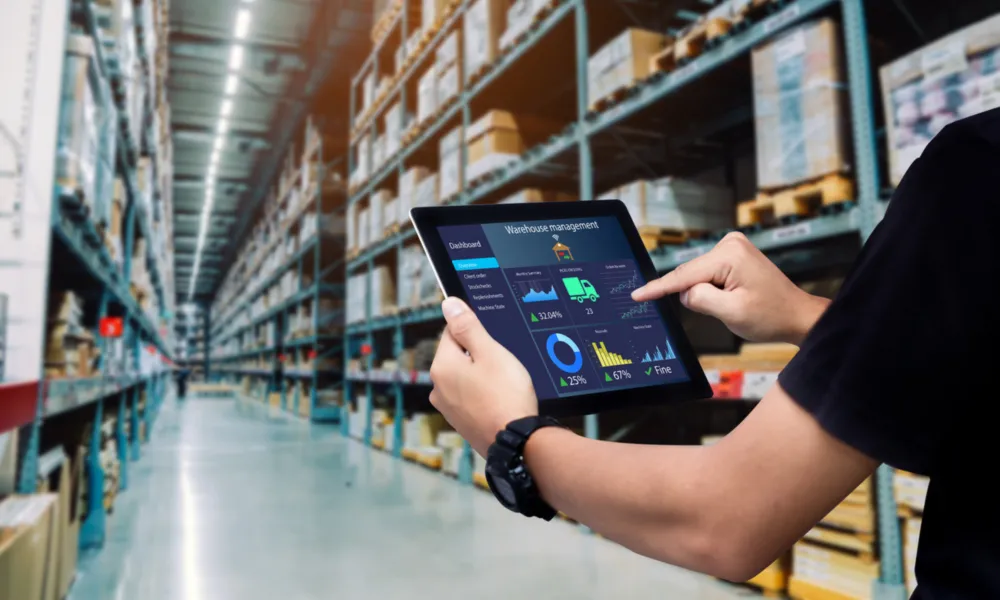
Providers are widely deploying Warehouse Management Systems (WMS) and Order Management Systems (OMS) with direct API integrations to major platforms. Supported by the National Master Plan for E-Commerce Development (2026–2030), the country is prioritizing logistics hubs, bonded warehouses, and robotics to streamline pick-and-pack workflows and reduce errors.
Read more: A Guide to Logistics and Warehousing in Vietnam
Vietnam ranks among Southeast Asia’s fastest-growing cold storage markets, with capacity expected to surpass 1.7 million pallets by 2028. Foreign investors are actively shaping a “cold triangle” across key southern provinces Tay Ninh, Dong Nai, and Ho Chi Minh City.
Lineage Logistics and LOTTE Global Logistics are building massive multi-million-dollar facilities in Hai Phong, Da Nang, Dong Nai, and Ho Chi Minh City. This shift lowers operating costs and ensures compliance with strict US, EU, and Japanese export standards.
Following the passage of Vietnam’s Law on Artificial Intelligence (134/2025/QH15) in late 2025, effective from March 2026, AI is now a regulated tool transforming logistics. At major ports like Tan Cang Cat Lai, AI-powered smart capabilities are accelerating cargo movement.
Meanwhile, AI route optimization is actively analyzing live traffic data across Hanoi and Ho Chi Minh City to ensure faster, more reliable fulfillment.
Read more: How is E-Commerce Changing Logistics?
Although e-commerce in Vietnam is booming, several complex issues are actively affecting its sustainable growth. Navigating these hurdles requires strategic foresight from both digital platforms and real estate developers.
The updated regulatory framework introduces strict mandates for cross-border and local operators. Platforms must now establish formal local legal presences, share real-time tax and seller data with centralized databases, and actively moderate livestream and affiliate marketing content.
These expanded scopes of accountability raise operational costs for businesses lacking real-time tracking capabilities.
Vietnamese shoppers now prioritize local product origins and official store badges over baseline discounts.

Official brand stores account for under 3% of total online shops but command over one-third of all revenue, proving that verified ecosystems are winning consumer loyalty over unverified third-party sellers.
The market has consolidated into an aggressive duopoly, causing Customer Acquisition Costs (CAC) to surge.
With Shopee and TikTok Shop controlling 97% of the market, the era of cheap organic reach is over. Increased platform fees and intense “shoppertainment” requirements force merchants to make steep, continuous marketing investments just to retain baseline transaction volumes.
Last-mile logistics now account for up to 53% of a single order’s total shipping cost, which pushes real logistics costs past 20% of GDP. Congested urban roads, fragmented markets, high volumes of small orders, and inconsistent rural address systems create severe bottlenecks that directly squeeze seller margins.
The shift from in-person to online shopping is fundamentally rewiring commercial real estate requirements across the country. We are seeing a clear, measurable pivot toward high-specification logistics spaces.
E-commerce in Vietnam is reshaping location strategy by pushing warehouse networks from expensive city centers into suburban hubs. Online operations require three times more warehouse space than traditional retail.
With package deliveries surging 30%, logistics companies are expanding into nearby provinces like Binh Duong, Da Nang, and Ninh Binh, turning these secondary areas into essential economic hubs.
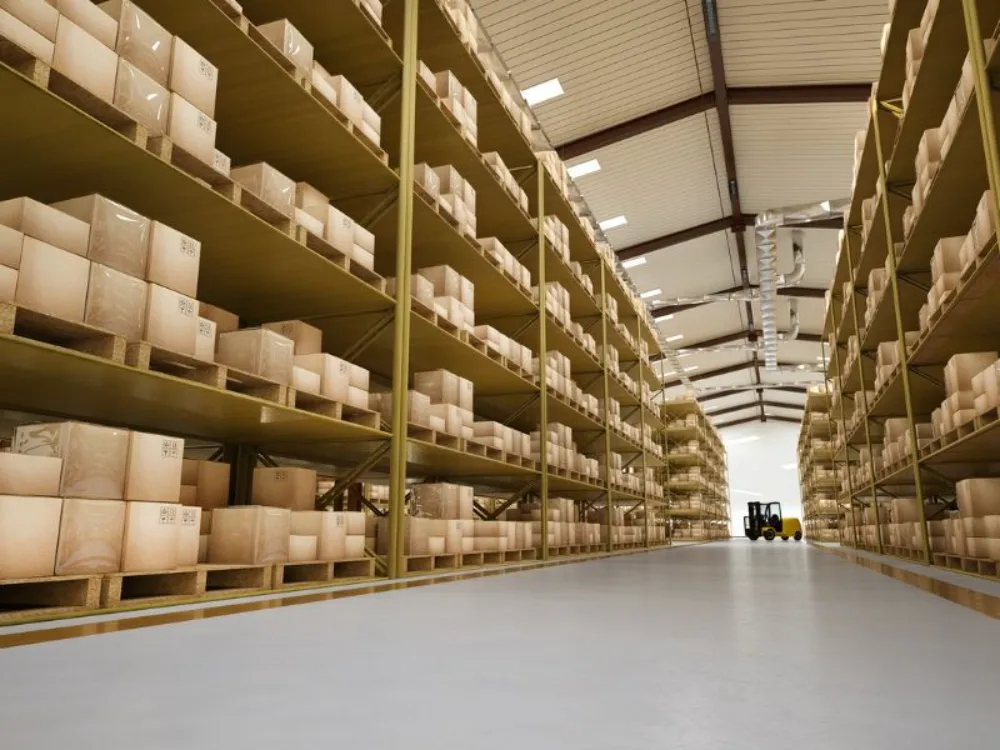
Facility specifications are shifting dramatically to prioritize high-tech logistics hubs and ready-built warehouses over traditional manufacturing spaces.
Lease structure flexibility has become essential because digital merchants require short-term, modular agreements that match the fast-paced nature of online retail.
Here are the most common questions we receive about e-commerce in Vietnam and its impact on the industrial sector.
A: In the first half of 2026, the market generated VND 291.6 trillion (US$11 billion) in revenue, up 44.1% year-on-year, with 2.19 billion products sold across 613,800 active online stores.
A: Shopee and TikTok Shop dominate the landscape, forming a fierce duopoly that commands a combined 97% of the total market share.
A: E-commerce supply chains require up to three times more warehouse space than traditional retail. For every $1 billion in e-commerce growth, an additional 1.25 million square feet of distribution space is needed.
A: Major challenges include high last-mile logistics costs, counterfeit goods, strict new tax and legal compliance mandates, fierce duopoly competition, and infrastructure bottlenecks in rural areas.