16 May 2026


Binh Duong, now part of Ho Chi Minh City, stands as Vietnam’s “industrial park capital” with 31 operational Binh Duong industrial park zones covering nearly 12,700 hectares.
With an impressive 91-94% occupancy rate and plans to expand to 42 parks by 2030, this region is transforming toward “Industrial Parks 2.0” – integrated, high-tech, and green-certified spaces that represent the future of Vietnamese manufacturing.
Binh Duong has rightfully earned its reputation as Vietnam’s industrial park capital due to its strategic location in Ho Chi Minh City, superior infrastructure, proactive investment policies, and a mature ecosystem of over 30 industrial parks. This dynamic hub pioneered the industrial-urban-service model (exemplified by VSIP), attracting high-tech manufacturing, electronics, and global investors with smart, sustainable, and well-connected industrial zones.
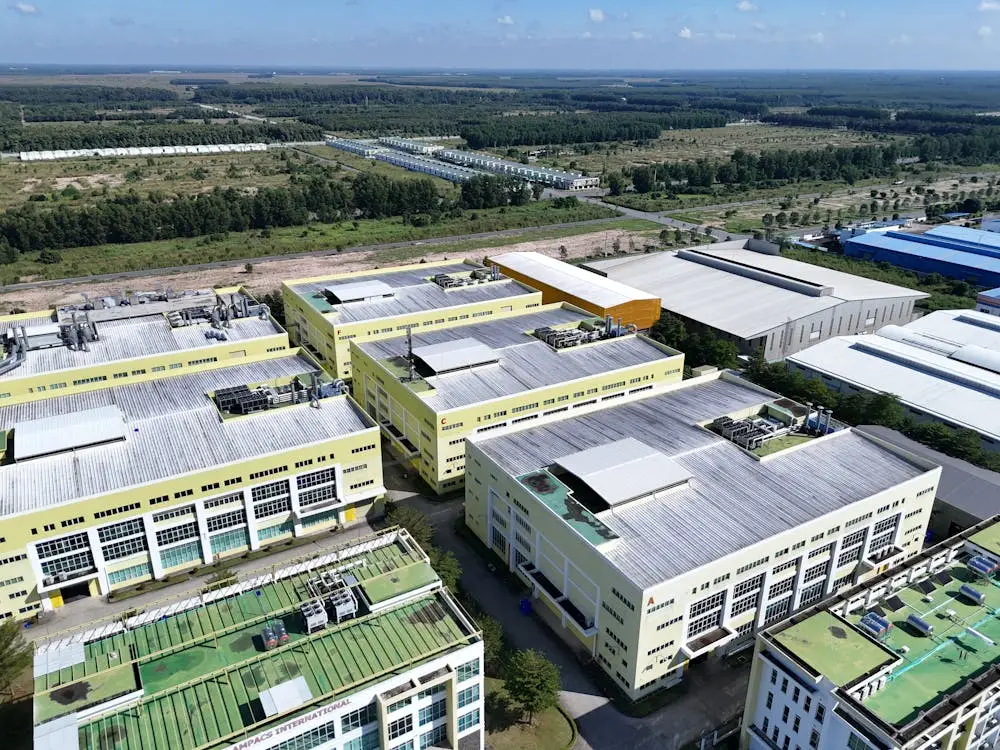
The remarkable success of Binh Duong industrial park development is evident in several key metrics that demonstrate its industrial dominance:
– FDI Attraction: Cumulative FDI projects exceed 3,130 with over $29.7 billion in registered capital, largely driving regional growth.
– Economic Performance: Frequently ranks among the top 5 provinces in Vietnam for GRDP per capita, with high industrial production growth.
– Industrial Coverage: Houses 30+ Industrial Parks with an average occupancy rate often exceeding 80%, indicating high demand.
When comparing Binh Duong industrial park offerings with neighboring Dong Nai, both regions serve as Vietnam’s largest industrial centers in the Southeast, but with distinct characteristics:
– Binh Duong: Distinguished by its modern industrial infrastructure, high concentration in VSIP industrial parks, sustainable development, and attraction of high-quality FDI.
– Dong Nai: Generally stronger in heavy industry and development of long-established industrial parks, currently aiming to develop into a regional logistics center.
The diverse landscape of Binh Duong industrial park options provides investors with specialized zones tailored to various industrial needs. Each park offers unique advantages depending on industry type, scale of operations, and strategic priorities.
The following guide highlights the most significant industrial zones that are shaping Binh Duong’s manufacturing future:
| Park | Developer | Size | Specialization | Land Lease ($/m², full term) | RBF Rental ($/m²/month) |
| Vietnam Singapore Industrial Parks (VSIP I, II, III) | Becamex IDC (Vietnam) and Sembcorp Development (Singapore) | VSIP I: 500 ha (Thuan An area); VSIP II: 2,045 ha (Thu Dau Mot area); VSIP III: 1,000 ha (Tan Uyen area) | Established hubs (I & II); high-tech and sustainable tenants like LEGO and Pandora (III) | $180–$250 (prime) | $5–$6 |
| My Phuoc Industrial Parks (I, II, III) | Becamex IDC | MPIP I: ~450 ha; MPIP II: ~800 ha; MPIP III: ~2,280 ha | Massive scale, integrated urban infrastructure | $120–$175 | $3–$5 |
| Bau Bang Industrial Park | Becamex IDC | Over 2,000 ha | Apparel and electronics; major international manufacturers | $100–$150 | $4.5–$5.5 |
| Song Than Industrial Parks (I, II, III) | Thanh Le Import-Export Trading Corporation | 178 ha | Oldest and most established zones; logistics (proximity to HCMC and Song Than Station) | $150–$200 (HCMC-adjacent premium) | n/a (mostly land/built-out) |
| Binh Duong Industrial Park (BDIP) | Frasers Property | 106 ha | Premium ready-built factories and warehouses | n/a | $5–$6 |
Vietnam Singapore Industrial Parks (VSIP I, II, III) are widely considered the most successful and modern in the region, with VSIP I (500 ha) in the Thuan An area and VSIP II (2,045 ha) in the Thu Dau Mot area serve as established hubs, while VSIP III (1,000 ha) in the Tan Uyen area focuses on high-tech and sustainable tenants like LEGO and Pandora.
My Phuoc Industrial Parks (I, II, III), developed by Becamex IDC, feature My Phuoc 3 as one of the country’s largest parks (2,280 ha), known for its massive scale and integrated urban infrastructure.
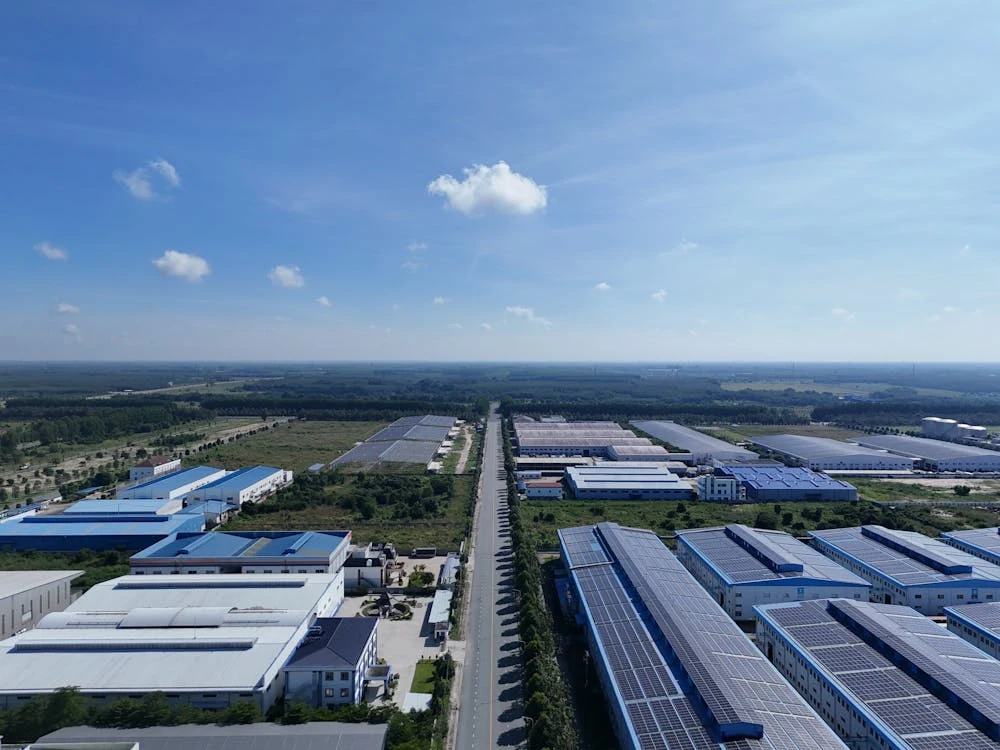
Bau Bang Industrial Park represents a mega-complex of over 2,000 hectares divided between industrial and urban development, attracting major international manufacturers in apparel and electronics.
Meanwhile, Song Than Industrial Parks (I, II, III), strategically located in Di An, are some of the oldest and most established zones, benefiting from proximity to Ho Chi Minh City and Song Than Station for logistics.
Lastly, Binh Duong Industrial Park (BDIP), a modern project by Frasers Property in Thu Dau Mot, focuses on premium ready-built factories and warehouses.
Binh Duong’s industrial landscape is strategically distributed across five key districts, each offering distinct advantages for different types of manufacturing and investment needs. This regional distribution ensures efficient land utilization while preventing overconcentration in any single area.
| Area | Key Industrial Parks | Specialization | Strategic Advantage |
| Thuan An | VSIP I, Viet Huong 1, Dong An | General / Established manufacturing | Established infrastructure, excellent connectivity in Ho Chi Minh City |
| Thu Dau Mot | VSIP II, Dai Dang, Kim Huy, Phu Tan | Electronics and high-tech manufacturing | Diverse options for specialized sectors |
| Ben Cat | My Phuoc (I-III), Thoi Hoa, Protrade | Large-scale manufacturing | Integrated urban amenities |
| Di An | Song Than (I & II), Binh Duong IP | Logistics-oriented businesses | Direct rail access (via Song Than Station) |
| Tan Uyen | Nam Tan Uyên, VSIP II-A, VSIP III | High-tech and sustainable industries | Positioned as the future hub for next-gen manufacturing |
Understanding the cost structure and available incentives is crucial for investors evaluating Binh Duong industrial park opportunities. The area offers competitive pricing compared to regional counterparts, coupled with attractive government incentives that can significantly impact the total cost of operations.
From land leasing to tax benefits, Binh Duong has structured its offerings to maximize value for both new and expanding businesses.
Binh Duong industrial park pricing remains competitive despite strong demand, offering various options to suit different business models and investment scales. The pricing structure reflects the maturity and quality of infrastructure available across different zones.
– Average land rental: Generally ranges from $120 to $180 per m² for a full lease term, depending on location and park quality.
– Prime locations: Sites in VSIP II or areas bordering Ho Chi Minh City can reach $180 to $250 per m², reflecting their superior positioning.
– Ready-Built Factories (RBF): Monthly rental rates for modern warehouse and factory spaces average between $2 and $6 per m².
– Operating fees: Typical management fees are approximately $0.06 per m² per month, with industrial water priced around $0.55 per m³.
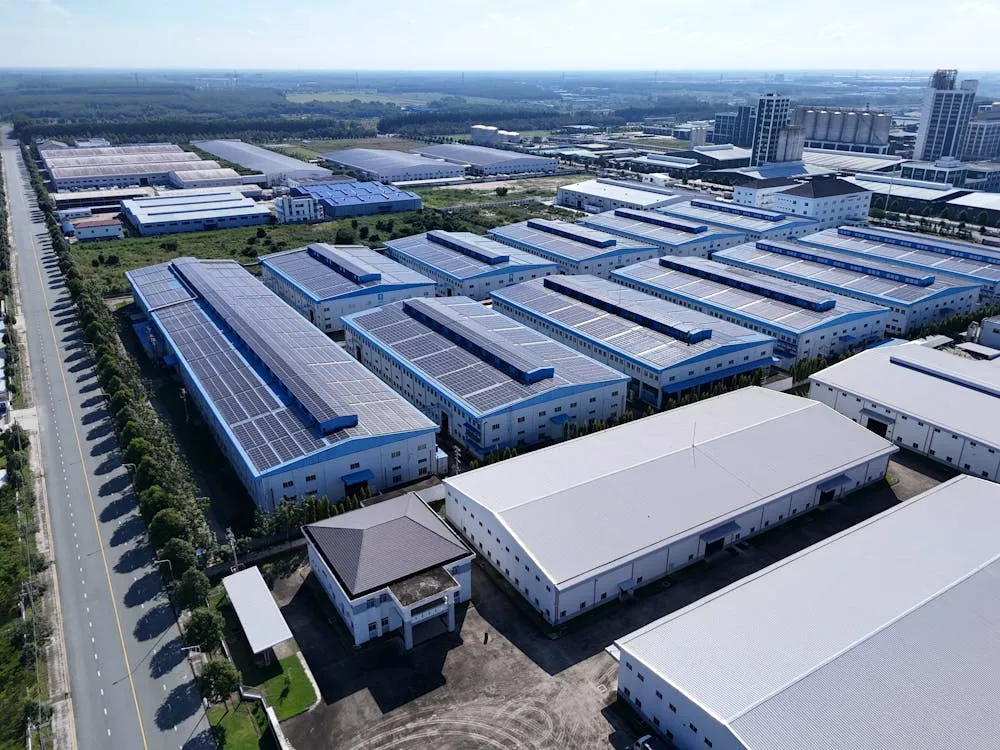
Vietnam’s government has implemented a comprehensive incentive framework to attract quality FDI to Binh Duong industrial park developments. These incentives are particularly advantageous for high-tech industries and large-scale manufacturing operations looking to establish regional production bases.
– Land Rent Reduction: IP developers who offer at least a 30% rent reduction to SMEs and high-tech firms for the first five years are eligible for State reimbursement under Decree 20/2026/ND-CP.
– Corporate Income Tax (CIT): Significant projects can receive a 10% preferential rate for 15 years, with a 4-year total exemption followed by a 50% reduction for the next 9 years.
– Import Duties: Exemption from duties on machinery and raw materials for the initial 5-year startup phase is standard for large-scale FDI.
– Additional incentives: Customized incentive packages available for projects exceeding $300 million or demonstrating high-tech capabilities.
Binh Duong is positioning itself at the forefront of sustainable industrial development, recognizing that future competitiveness depends on meeting global ESG standards. This transformation represents a strategic pivot from traditional manufacturing spaces to integrated, technology-driven ecosystems that minimize environmental impact while maximizing efficiency.
John Campbell, Director, Industrial Services, Savills Vietnam: “We’re receiving many requests from clients interested in sustainable industrial parks, particularly from European countries like Germany and France, and some from the US.”
(Source: Savills Vietnam commentary on green industrial land demand, 2024)
The expansion strategy for Binh Duong industrial park infrastructure reflects a careful balance between meeting immediate demand and creating future-ready industrial spaces. This roadmap prioritizes quality over quantity, with new developments incorporating advanced sustainability features from inception.
– Expansion goals: By 2030, Binh Duong plans to host 42 industrial parks covering up to 21,000 hectares, nearly doubling current capacity.
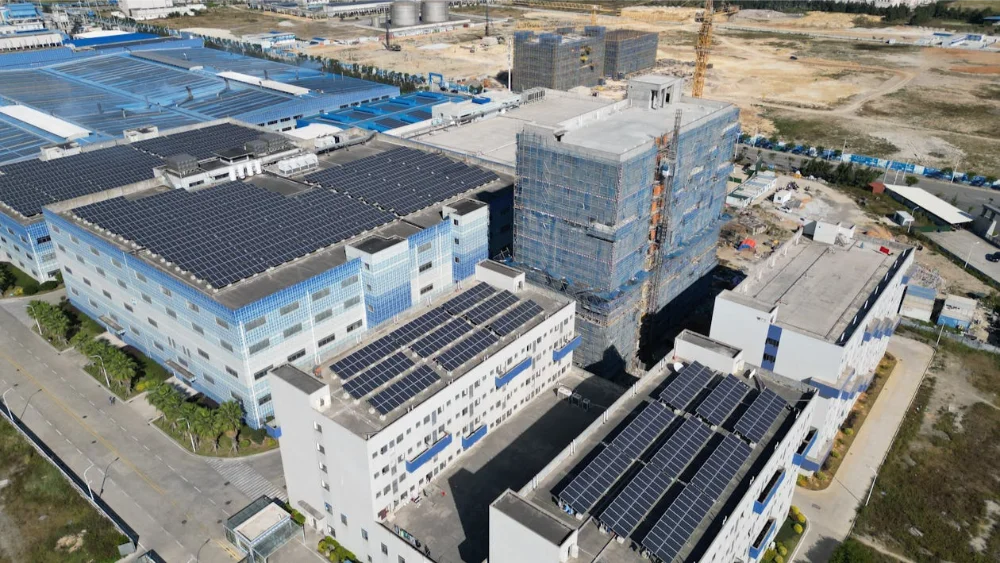
– VSIP III: This “new-generation” park serves as the centerpiece of current development, anchored by major tenants like LEGO and Pandora, featuring smart technology and strict environmental standards.
– Cay Truong & Bau Bang Expansion: Recent groundbreakings on the Cay Truong IP (700 ha) and the expansion of Bau Bang IP (380 ha) focus on ecological zoning and green logistics.
– Specialized zones: The area is establishing a 15.47-hectare IT Park and the 786-hectare THACO mechanical engineering complex (US$2.87 billion total investment) in Bac Tan Uyen to attract automation and R&D-focused firms.
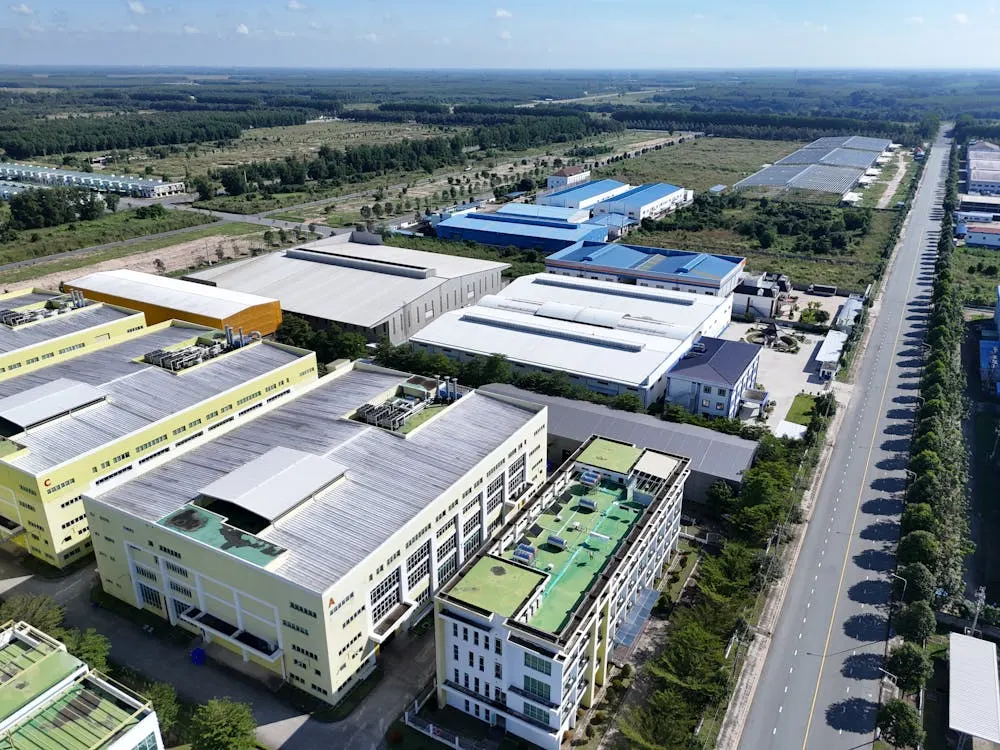
The sustainability initiatives being implemented across Binh Duong industrial park developments go beyond simple compliance, aiming to create genuine competitive advantages for tenant companies.
– Net-Zero focus: The area is shifting toward Net-Zero and smart industrial models to attract high-value industries like semiconductors and green tech.
– Green logistics: Transitioning to digitalized public services and green energy systems (solar/wind) within parks to meet ESG requirements for global firms.
– Environmental standards: New parks like VSIP III feature strict environmental standards and green building certifications.
– Resource efficiency: Advanced water recycling, waste management, and energy-efficient infrastructure across new developments.
Binh Duong industrial park success is fundamentally linked to its exceptional infrastructure networks that provide seamless connectivity to domestic and international markets. The area has adopted a “traffic as lifeblood” approach, continuously investing in transportation infrastructure to ensure industrial zones remain highly accessible and logistically efficient.
– Road networks: Excellent road networks (National Route 13) connecting industrial parks to major economic centers.
– Airport proximity: Strategic location just 20-33km from Tan Son Nhat Airport, facilitating international business and cargo transport.
– Port access: Close proximity to Cat Lai Port (24-27km) enabling efficient maritime logistics.
– Internal connectivity: Projects are focused on linking industrial hubs directly to major transportation nodes.
– Digital infrastructure: High-speed telecommunications networks supporting Industry 4.0 requirements.
The next five years will bring transformative changes to Binh Duong industrial park landscape, marked by significant capacity expansion, changing tenant profiles, and evolving investment requirements. The evolution reflects broader shifts in global manufacturing patterns and Vietnam’s rising position in advanced production networks.
Binh Duong plans to operate 42 industrial parks by 2030, covering over 20,000 hectares, with 19 new or expanding parks between 2026-2030. New projects, such as those in Bac Tan Uyen, Dau Tieng, and Phu Giao, focus on zero-emission goals, renewable energy, and green, smart technology, transitioning away from traditional labor-intensive industries.
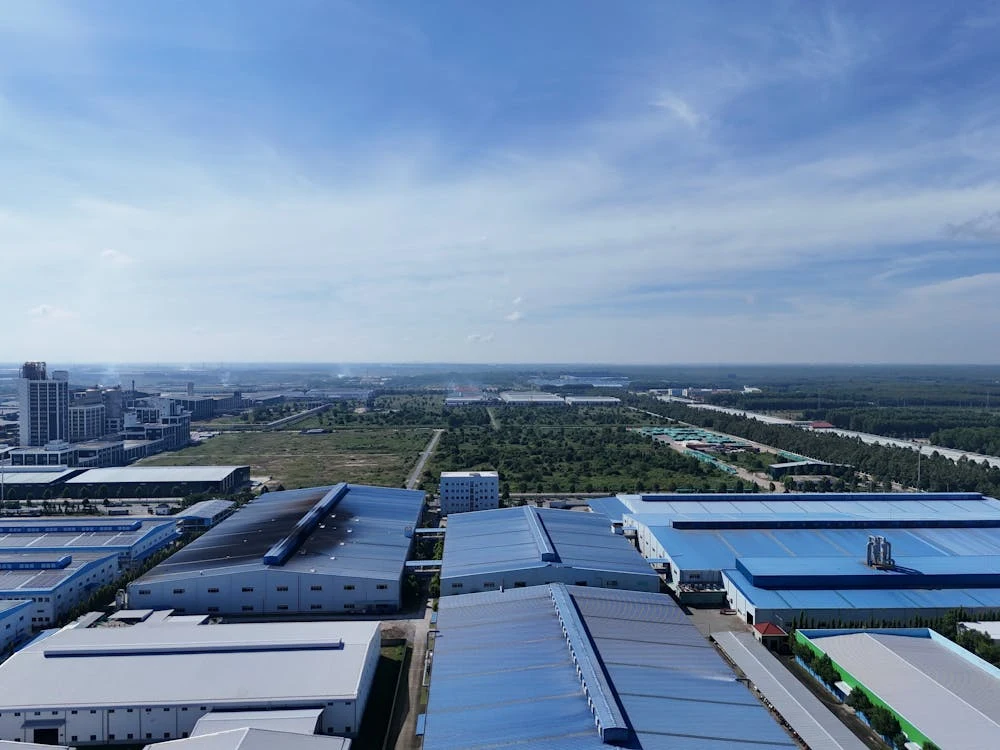
The area is increasingly selective, prioritizing projects in electronics, semiconductor manufacturing, high-tech, and sustainable supporting industries. The tenant profile is shifting away from traditional textiles and furniture toward high-value added production, research and development (R&D), and smart factories.
For investors, industrial land prices in Binh Duong are expected to continue rising due to strong demand and high occupancy rates (over 90% in many established parks). Investors must meet higher environmental and technological standards (eco-friendly, sustainable) to gain approval.
Besides, the “3-in-1” model (combining IPs, urban areas, and service areas) provides opportunities in logistics, warehousing, housing for workers, and service-oriented infrastructure.
At Savills Industrial Vietnam, we combine deep market knowledge with proprietary tools to help investors identify and secure the optimal Binh Duong industrial park location for their specific requirements.

Our experienced team understands the complexities of Vietnam’s industrial real estate market and provides end-to-end support throughout the entire investment process.
– Proprietary Tools: We use Power BI business intelligence and our in-house Industrial Property Scorecard to scientifically match your business with the optimal zone based on utilities, incentives, and logistics.
– End-To-End Tenant Representation: We run your site search across all 31 operational parks, shortlist against your power, logistics, and ESG criteria using our Industrial Property Scorecard, and lead the lease negotiation.
– Seamless Transactions: Our team simplifies complex Vietnamese real estate law, assisting with everything from IRC/ERC applications to LURC (Redbook) acquisition and fit-outs.
– Proven Track Record: We’ve successfully facilitated 40+ developer contracts, leased 99,164 m², and assisted in over $28 million in transaction values.
Brief our industrial team on your site requirements and we’ll come back with a shortlist of Binh Duong industrial parks matched to your power, logistics, and incentive profile. Contact John Campbell, Director, Industrial Services at Savills Vietnam, on +84 986 718 337 or reach the Savills Industrial team for a confidential consultation. You can also download the Industrial Insider 2025.
Navigating the complexities of Binh Duong industrial park investments requires understanding key regulatory, operational, and strategic considerations. The following frequently asked questions address common investor concerns about establishing operations in this dynamic industrial hub.
A: Standard land lease terms in Binh Duong industrial parks typically range from 50 years for foreign investors, with the possibility of extension. For ready-built factories, lease terms are usually 5-10 years with renewal options, providing flexibility for growing operations.
A: The complete approval process for establishing a factory in Binh Duong typically takes 3-6 months, depending on project scale and sector. This includes obtaining the Investment Registration Certificate (IRC), Enterprise Registration Certificate (ERC), and necessary construction and environmental permits.
A: Vietnam generally allows 100% foreign ownership in most manufacturing sectors within Binh Duong industrial parks, with exceptions in certain restricted industries. The specific investment conditions depend on your business line, as outlined in Vietnam’s Positive List for investment.
A: Yes, most Binh Duong industrial parks allow investors to construct custom-built facilities on leased land, subject to approved master plans and building regulations. The construction process typically requires 6-12 months for standard manufacturing facilities, with park management providing support for permitting processes.
A: Binh Duong industrial parks generally maintain high security standards with 24/7 surveillance, controlled access points, and dedicated security personnel. It has a reputation for industrial stability with minimal labor disruptions compared to other manufacturing regions in Vietnam, providing a secure environment for operations.