19 June 2026


Dong Nai’s transition into Viet Nam’s seventh centrally governed city, alongside the development of Long Thanh International Airport and plans for a Free Trade Zone (FTZ), is opening a new chapter for the province within Southern Viet Nam’s economic structure.
According to John Campbell, Director, Industrial Services at Savills Vietnam, these emerging developments are expected not only to accelerate industrial growth but also strengthen Dong Nai’s role within the region’s manufacturing, logistics and export value chain.

John Campbell, Director of Industrial Services at Savills Vietnam
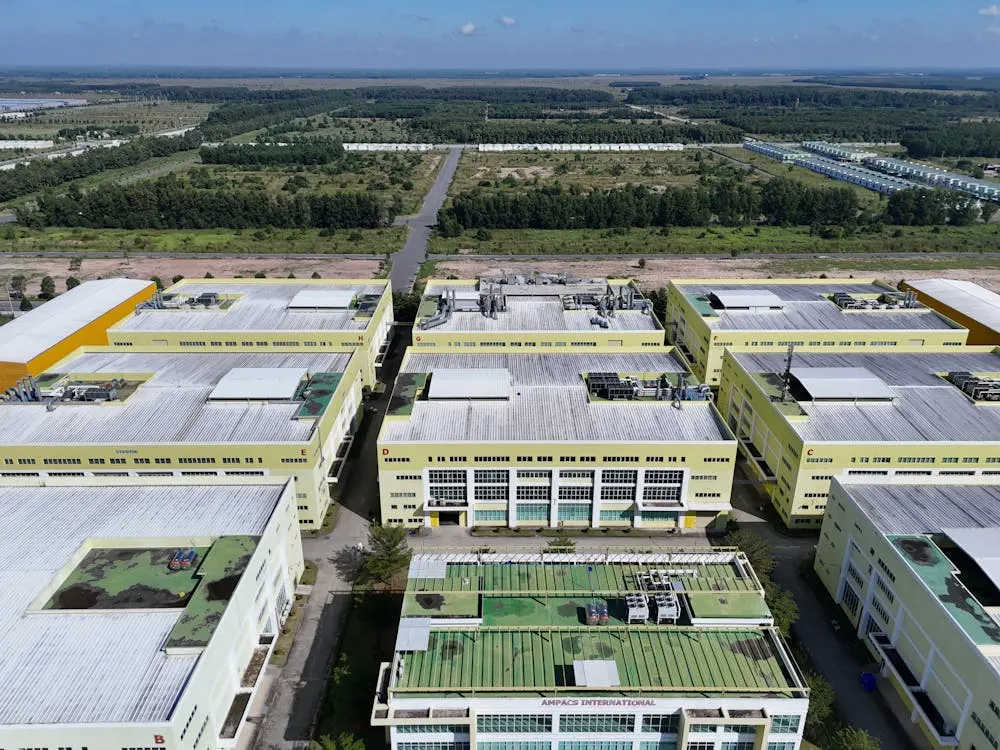
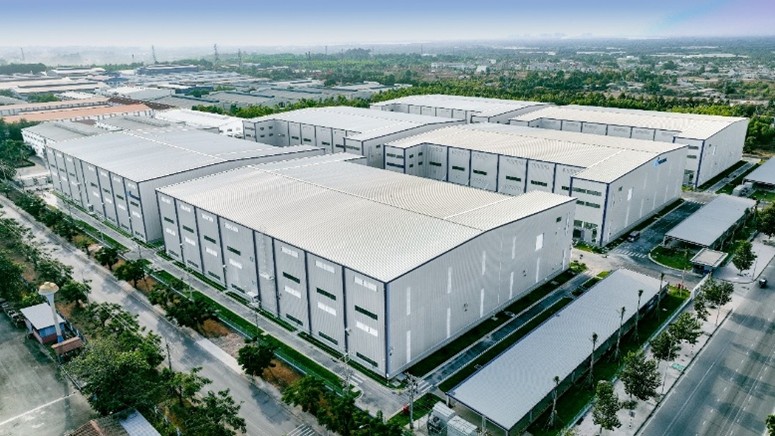
Over the past decade, Dong Nai has consistently remained one of the key southern industrial markets. As of December 2025, the province currently offers 6,725 ha of industrial land for lease, with 94% occupancy. Meanwhile, ready-built factory and warehouse (RBF/W) supply has recorded 3.48 million m2, with 95% occupancy.
Strong absorption continues to reflect healthy leasing demand across industrial land and ready-built assets. Industrial land rents are averaging US$192/m2/lease term, while RBF/W are leasing at US$4/m2/month.
According to Savills, Dong Nai is no longer competing solely on land availability. Instead, the province is increasingly positioned to develop higher value-added industrial ecosystems, including high-tech manufacturing, aviation logistics, supporting industries and export-processing zones.
Following this, site selection strategies are evolving, not only focusing on land costs, but examining infrastructure quality, labour availability, supporting amenities and long-term expansion potential.
Between 2021 and 10M/2025, fabricated metal products and electrical M&E accounted for 40% of newly established manufacturing projects. Electronics, rubber and plastics also represented a significant share, highlighting the province’s growing role within regional supporting industries and export-oriented manufacturing.
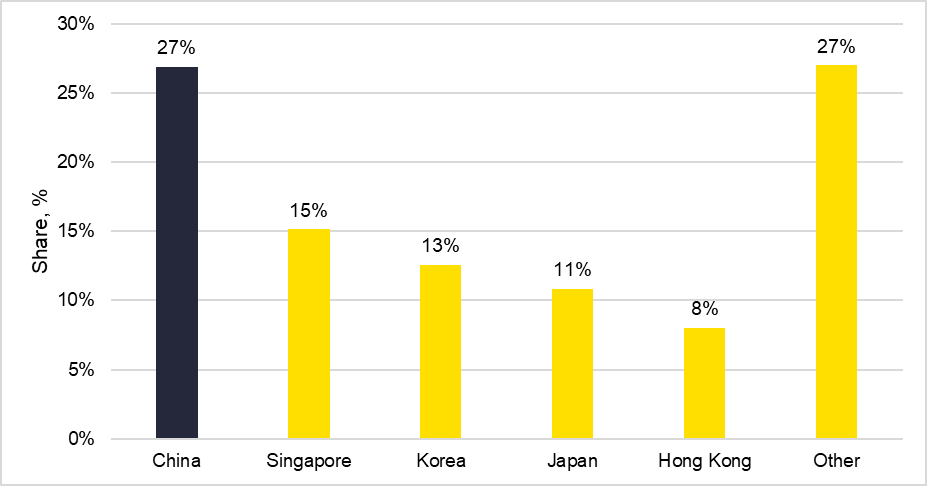
Chart: Breakdown of New Manufacturing Projects in Dong Nai by Country, 2021–2025 (%)
From an investment perspective, China holds 27% of new manufacturing projects, followed by Singapore, South Korea and Japan. According to Savills, this reflects both ongoing supply chain diversification and the continued expansion of Asian manufacturing clusters into Viet Nam.
Between 2021 and 10M/2025, Dong Nai recorded 375 new manufacturing projects. Leasing transactions for factories and industrial land also increased significantly, indicating continued confidence in long-term expansion plans.
Campbell notes, “Leasing demand has strengthened significantly in recent years, with new FDI manufacturing projects in Dong Nai increasing from 31 factory leasing transactions in 2021 to 110 in 2025. Land transactions also grew from 10 to 29 deals over the same period, reflecting stronger investor confidence in long-term expansion.”
One of the major catalysts expected to transform Dong Nai is Long Thanh International Airport, and the proposed US$16 billion FTZ development.
According to Savills, Long Thanh is expected to serve not only as an international passenger airport but also as a new air cargo gateway. Combined with the deep-sea port network in Ba Ria–Vung Tau and HCMC’s role as a financial and service hub, Dong Nai has the opportunity to develop an integrated industrial, logistics and export ecosystem.
Manufacturers could establish production facilities, consolidate goods at logistics hubs near Long Thanh, and export products through air freight and deep-water seaports. This multimodal logistics model is expected to improve transportation efficiency and strengthen supply chain resilience.
At the same time, the FTZ is expected to attract higher-value industrial and logistics sectors, including electronics, electrical M&E, cold chain logistics, medical equipment, and regional distribution centres with supporting industries.
According to Savills, rather than pursuing broad-based industrial expansion, Dong Nai is well positioned to evolve into a specialised industrial ecosystem with distinct competitive advantages compared to neighbouring provinces.
Despite these new growth drivers, Savills believes Dong Nai will still need to address several challenges in order to fully capitalise on the opportunities created by the FTZ and Long Thanh Airport.
One of the key issues will be infrastructure connectivity, particularly “last-mile” transport links between industrial parks (IPs), the upcoming airport and port systems. Although several major infrastructure projects are currently underway, logistics integration and transportation efficiency will remain essential to the overall performance of the industrial and export supply chain.
Beyond infrastructure, regulatory and institutional frameworks will be equally critical. According to Savills, FTZ models require streamlined customs procedures, flexible tax mechanisms, and more efficient investment approval processes to enhance competitiveness.
Stronger regional planning coordination between Dong Nai, HCMC, and Ba Ria–Vung Tau will also become increasingly important as logistics and manufacturing networks continue to integrate.
According to Campbell, with the successful delivery of supporting logistics infrastructure within the FTZ and at Long Thanh Airport, Dong Nai is set to evolve from a traditional manufacturing base into one of the region’s leading production and logistics hubs.