

27 May 2026


Vietnam’s Law on Artificial Intelligence (Law No. 134/2025/QH15) took effect on March 1, 2026, becoming Southeast Asia’s first comprehensive AI law Vietnam.
Understanding these regulations is essential for businesses operating in or entering the Vietnamese market, especially as AI requirements increasingly intersect with industrial real estate and business operations.
This article details what the AI Law contains, how it intersects with PDPL data requirements, which KCN (industrial park) infrastructure can clear the compliance bar, and practical FAQs for industrial operators.
“For investors and operators, the conversation is no longer just about land and location, it’s about power availability, connectivity, scalability, long-term operational risk, and the regulatory environment.”
– John Campbell, Head of Industrial Services, Savills Vietnam
Vietnam’s regulatory approach to AI centers on a “Management for Development” framework that balances innovation with control. The AI law implementation follows a risk-based classification system requiring companies to categorize their AI systems as low, medium, or high risk, with human oversight mandated as the “final arbiter” in critical decisions.

Key compliance aspects include:
– Grace periods of 12 months for general AI systems (until March 2027) and 18 months for critical sectors like healthcare and finance (until September 2027)
– Parallel operation with the PDPL (effective January 1, 2026) and the modernized Cybersecurity Law
– Dual ministry oversight with the Ministry of Science and Technology (MoST) leading national AI coordination and the National AI Database, while the Ministry of Public Security (MPS) handles infrastructure and data security
– Requirement for industrial operations to embed algorithmic transparency and security controls directly into supply chains and automated facilities
The regulatory framework imposes layered compliance environment that requires careful navigation for industrial operators. Our team at Savills helps clients understand how these regulations translate into practical facility requirements and operational procedures.
The AI law Vietnam works in tandem with the Personal Data Protection Law (PDPL, Law No. 91/2025/QH15), which is implemented through Decree 356/2025/NĐ-CP (effective 1 January 2026, replacing the previous Decree 13/2023/NĐ-CP). These regulations establish a comprehensive framework that impacts how industrial facilities collect, process, and store data through AI systems.
Critical compliance elements include:
– Mandatory Data Protection Impact Assessments (DPIAs) and Transfer Impact Assessments (TIAs) updated every six months
– Strict consent requirements for data collection and processing
– Severe penalties for cross-border data transfer breaches: up to 5% of prior year’s revenue or minimum VND 3 billion
– General data violations carrying maximum fines of VND 3 billion, with illegal data trading incurring fines up to 10 times the revenue gained
– Mandatory breach reporting to MPS within 72 hours, with notification requirements for biometric or financial data incidents
For industrial real estate, these requirements directly impact smart building access, CCTV, and surveillance AI systems, which must secure explicit consent and strictly limit data storage. Our clients often don’t realize that seemingly routine building management systems now fall under these strict data protection requirements.
The AI law Vietnam establishes differentiated requirements based on industry application and risk level, with specific implications for industrial real estate operations. These industry-specific regulations create varying compliance thresholds that directly influence facility design and operational capabilities.
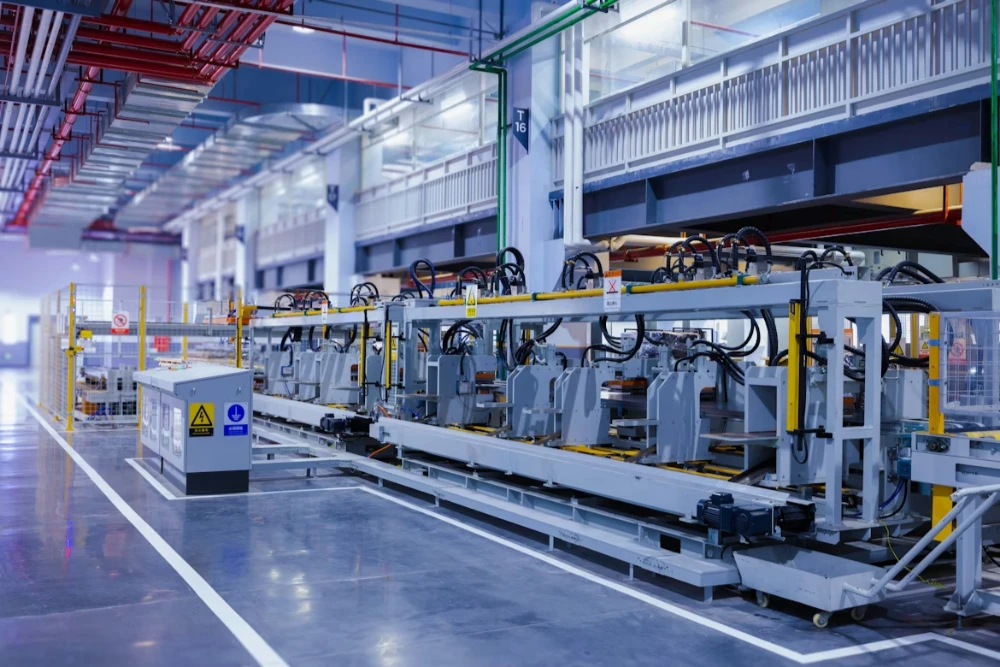
Industrial operators must navigate these key requirements:
– High-risk industrial AI (such as critical factory controls) requiring mandatory conformity assessments, third-party audits, and documented human oversight
– Smart factory IoT and automation systems complying with data localization and cybersecurity rules to prevent manipulation of human perception
– Logistics AI (including automated routing or fleet management) needing clear labeling of machine-generated outputs and maintenance of transparent, auditable records
– “Green” infrastructure promotion supporting AI-driven HVAC optimization and predictive maintenance to align with Vietnam’s sustainability mandates
– Workforce AI protections requiring employers to safeguard worker data from algorithmic bias and unfair performance tracking
– Regulatory sandboxes and AI clusters in high-tech parks offering incentives for testing compliant innovations
Industrial parks must now provide robust, secure, and high-bandwidth networks to attract FDI tenants utilizing high-risk AI. This represents a significant shift from traditional infrastructure priorities and raises the bar for which KCN can attract AI-intensive tenants.
The AI law establishes a foundation that will continue evolving through specific implementation guidelines and supplementary regulations. Staying ahead of these developments is essential for long-term industrial planning and investment strategies.
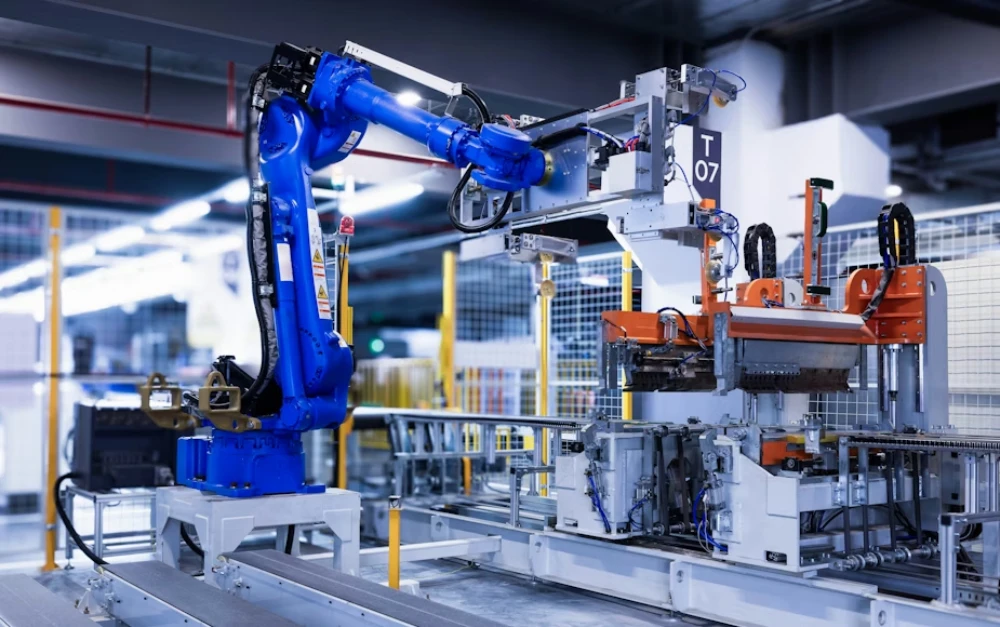
Anticipated regulatory developments include:
1. Creation of a National AI Development Fund for 2026-2027 under Decision No. 367/QD-TTg and development of AI clusters at high-tech parks
2. Vietnam’s target to harmonize 80% of national standards with international benchmarks by 2035
3. Potential system suspensions, recalls, and administrative fines of up to 2% of annual revenue for severe AI breaches
4. Emerging focus on mandatory digital watermarking for AI-generated audio/video/images and disclosure requirements when users interact with AI agents
5. Active pursuit of cross-border digital economy agreements and AI governance cooperation with partners like the U.S. and Singapore
6. Requirements for businesses to audit internal AI by risk level, register assets via the AI Single-Window Portal, and establish local lawful contact points for high-risk systems
These future directions signal Vietnam’s commitment to becoming a regional leader in AI governance while maintaining an attractive environment for technology-intensive industrial investment.
Navigating the complexities of the new AI regulations requires specialized expertise that integrates regulatory understanding with practical real estate solutions. Our team at Savills offers comprehensive support to help industrial operators and developers align their assets with evolving requirements.
We leverage our proprietary Industrial Property Scorecard and Power BI analysis to evaluate properties against AI compliance requirements.
Our assessment goes beyond traditional location factors to include infrastructure capabilities, network security provisions, and data processing facilities that meet the stringent demands of the new regulatory environment.
Our legal and real estate experts help clients develop lease agreements that clearly allocate AI compliance responsibilities.
We incorporate specific data protection clauses that address consent management, breach notification protocols, and infrastructure maintenance requirements to protect both landlords and tenants.
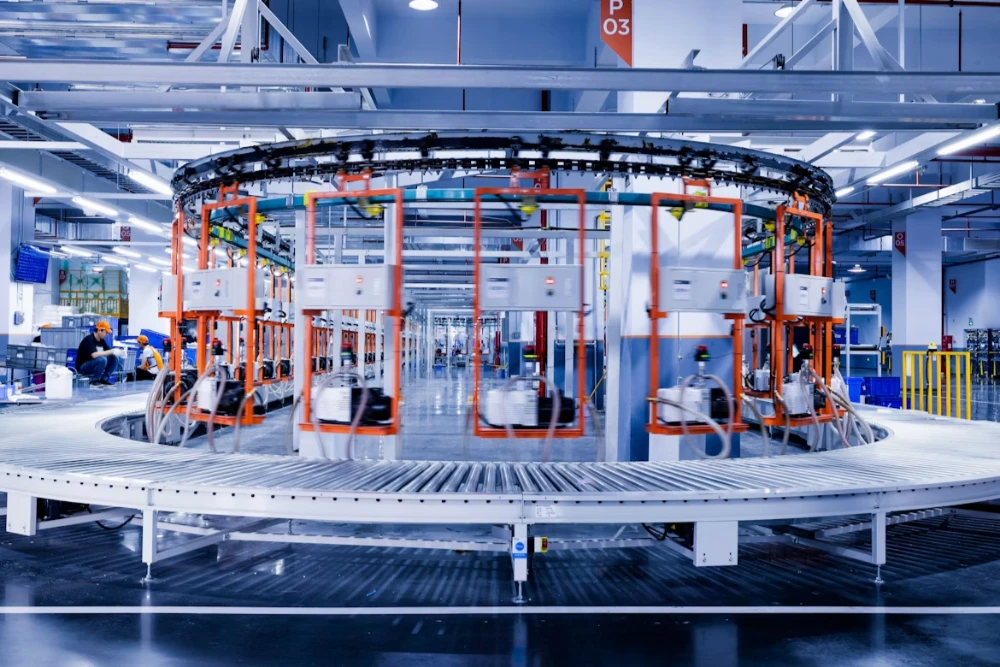
We guide industrial park developers in creating facilities that exceed minimum compliance requirements while achieving sustainability goals.
Our recommendations focus on integrating AI-ready infrastructure with ESG-aligned design principles that attract quality tenants and support long-term value creation.
Our dedicated research team continuously monitors regulatory developments related to AI law Vietnam, providing clients with timely updates and strategic guidance.
This proactive approach ensures our clients can adapt their operations ahead of compliance deadlines rather than reacting to enforcement actions.
The implementation of AI law in Vietnam creates both challenges and opportunities for industrial real estate stakeholders.
By partnering with Savills Industrial, you gain access to specialized expertise that translates complex regulatory requirements into practical real estate solutions.

Contact our industrial team today to find your next AI-ready, compliant industrial space that meets both your operational needs and regulatory requirements.
Understanding AI law Vietnam is essential for industrial operators navigating the new compliance landscape.
Existing leases should be reviewed to determine responsibility for AI compliance, particularly regarding building management systems and shared infrastructure. Many leases may need amendments to clearly allocate compliance costs and responsibilities.
Yes, though specific technical specifications continue to evolve through implementation guidance. Industrial parks targeting AI-intensive tenants typically need high-density power infrastructure with redundancy, advanced cooling capability, integration with renewable energy (to support ESG and CBAM compliance), and high-bandwidth secure networks for data localization. These exceed traditional industrial park infrastructure baselines.”
Non-compliance can result in system suspensions, mandatory recalls, administrative fines up to 2% of annual revenue, and potential operational shutdowns for severe violations involving critical infrastructure or data breaches.
Absolutely. The AI law applies to all organizations operating AI systems within Vietnamese territory, regardless of ownership structure, with specific provisions for cross-border data flows and foreign technology providers.
Yes. Vietnam’s regulatory framework provides substantial incentives for qualifying AI and high-tech facilities. These include tax and land incentives, regulatory sandboxes, and priority funding through the national AI development fund.