20 June 2026


E-logistics in Vietnam is experiencing remarkable growth, with a USD 11.62 billion GMV in 9M 2025 (+34.4% YoY) and TikTok Shop hitting 148% YoY growth. The market is projected to grow from USD 2.22B to USD 6.35B by 2034.
On the other hand, the industry is also facing challenges during its rapid development. Let’s delve into the article to learn about the obstacles, opportunities, and prospects of e-commerce in Vietnam logistics.
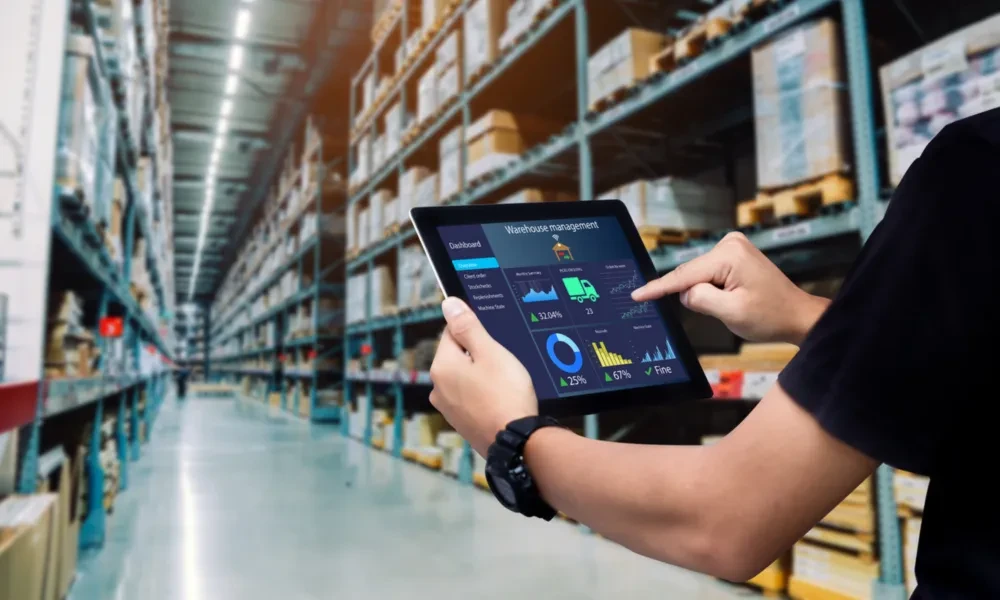
“Flexibility and strategic accessibility have become key criteria in site selection. Many companies are expanding into provinces such as Tay Ninh, Quang Ninh, and Hung Yen, rather than focusing only on traditional hubs like Binh Duong or Bac Ninh. The trend of building dual distribution centres, one in the North to serve China and one in the South targeting ASEAN, is becoming increasingly common.”
– John Campbell, Head of Industrial Services, Savills Vietnam
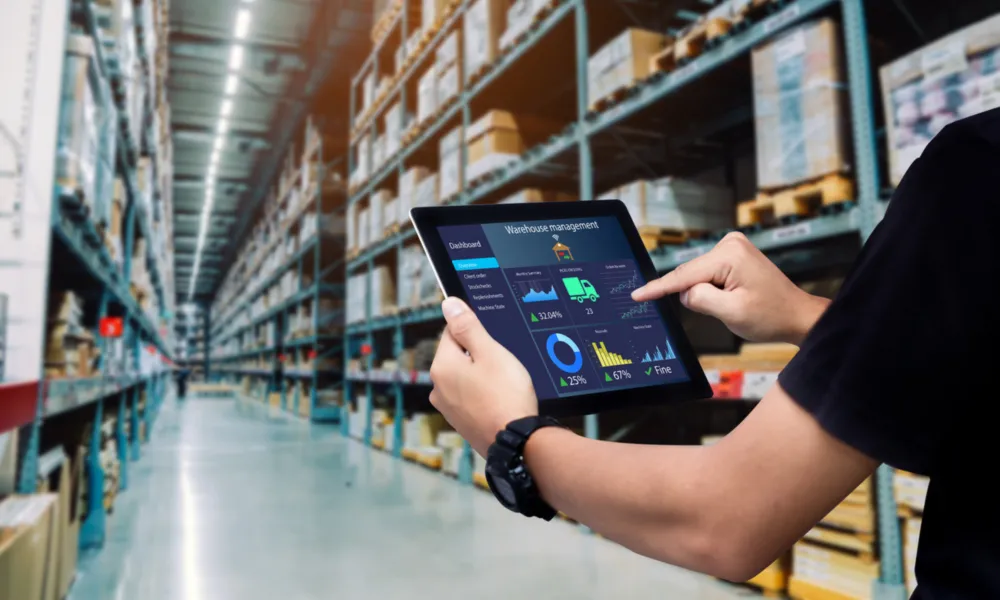
E-logistics, or E-Commerce logistics, defines the use of digital technologies and the internet to handle the distribution and transportation of goods. It’s not the same as traditional logistics, but these two can be combined. Due to its numerous nuances, e-logistics is an important concern for online retailers. It’s especially effective in the flow management process.
Thanks to rapid tech adoption, Vietnam ranks among the top 10 emerging logistics markets worldwide (Source: Vietnamplus). The sector contributes 4.5–5% as value-add, with 14–16% annual sector growth, driven by hyper-local fulfillment, smart warehousing, and last-mile delivery demand. Major domestic and foreign corporations are investing heavily, aligning with Vietnam’s national logistics strategy through 2035.
Read more: How is E-Commerce Changing Logistics?
Understanding e-commerce in Vietnam logistics will provide investors with a proper background and outlook. Here are some challenges that the market can bring:
Vietnam currently ranks 43rd globally on the World Bank’s Logistics Performance Index (LPI), maintaining its status as a top 10 emerging market.
While the country suffers from a heavy reliance on road transport, it also boasts over 3,000km of expressways and a vast multimodal transport network connecting railways, inland waterways, and major seaports.
The first phase of Long Thanh International Airport is accelerating towards commercial operation. The government is utilizing public-private partnerships (PPPs) to expedite funding and ease infrastructure bottlenecks.
High logistics costs remain a substantial hurdle with 94% of respondents sharing the same issue. In 2024, the cost for logistics in Vietnam is 16-17% of GDP, compared to other countries such as Japan with 11%, Singapore 8%, Malaysia 13%, etc. (Source: B&Company Inc.)

This significant cost differential affects competitiveness and puts pressure on margins for e-commerce businesses operating in Vietnam.
The State must continue adopting policies supporting retailers and logistics companies in improving smart logistics capabilities through advanced technologies.
Mechanisms promoting postal services as e-commerce delivery infrastructure are also essential, creating pressure on companies to invest despite limited resources.
Vietnam’s e-commerce sector presents tremendous opportunities for logistics providers and real estate investors. Digital transformation and government support create a favorable environment for e-logistics in Vietnam to thrive.
Vietnam’s e-commerce market, projected to exceed $29 billion, demands expanded warehousing, advanced tracking, and faster delivery networks. Companies are racing to build micro-fulfillment centers for 30-minute delivery standards.
Key opportunities include:

According to a report by YouNet ECI, the top four e-commerce platforms (Shopee, TikTok Shop, Tiki and Lazada) exceeded 458 trillion VND ($17.4 billion) in 2025, up 26%. Vietnam maintains 20–25% annual growth, ranking third in Southeast Asia.
Growth drivers include:
Vietnam’s e-commerce logistics relies on diverse 3PL partners and forward warehouse expansions. Three main provider types dominate:
Forward warehousing moves inventory closer to buyers through smaller regional hubs in Da Nang, Hanoi, and Ho Chi Minh City, speeding delivery and lowering costs. Foreign developers control over 75% of Vietnam’s warehouse space, building mega-hubs near China and in manufacturing zones like Binh Duong (now Ho Chi Minh city) and Bac Ninh.
The evolution of e-logistics in Vietnam is fundamentally reshaping warehouse requirements. Understanding these dynamics helps investors identify promising opportunities while enabling occupiers to make strategic operational decisions.
The dual DC model splits supply chains into centralized bulk storage hubs and agile last-mile fulfillment centers, dictating high demand for automation-ready assets while requiring occupiers to balance urban rental costs against transportation savings.
For investors:
For occupiers:
TCO, encompassing maintenance fees, property taxes, insurance, and hidden costs, reveals the true financial burden. Evaluating this fully loaded cost helps investors and occupiers make smart, long-term budget decisions.
Total Occupancy Cost = Base Rent + OpEx + Utilities + Hidden Fees.
Key cost drivers:

What occupiers and investors need to know:
Sustainable, ready-to-use warehouse space lowers risk and ensures climate compliance. According to U.S. Green Building Council, as of March 2026, over 8,300 warehouse projects have achieved or registered for LEED certification globally. Vietnam’s industrial hubs are experiencing a surge in modern, sustainable spaces. Major industrial park developments in Dong Nai are built to target top-tier LEED Gold certification.
For investors:
For occupiers:
Free trade agreements including CPTPP and EVFTA will positively impact e-logistics in Vietnam, attracting FDI to infrastructure and data systems.
Vietnam actively lowers regulatory barriers through Decision No. 163/NQ-CP for cohesive supply chain solutions and Decision No. 1012/QD-TTg for nationwide logistics centers. Investors are expected to increase spending as the government targets reducing high logistics costs through automation and smart hubs.
Businesses must adopt AI-driven warehousing, predictive delivery systems, and localized fulfillment models to succeed despite ongoing challenges with costs, integration, and digital adoption.
E-logistics in Vietnam faces challenges with high costs (16-17% of GDP) and infrastructure constraints, yet presents immense opportunities for growth.

Investing in a Vietnam warehouse promises stable and long-term profit. If you want to know more about this investing area, don’t hesitate to contact Savills Industrial for consultation.