
30 June 2026


Commercial vs industrial real estate in Vietnam 2026 sees industrial outperforming with 300+ zones above 80% occupancy and $70–$280/m² rents, while commercial is projected to be $48.92 billion in 2026 and grows at 8.01% CAGR from 2026 to 2031.
Various factors separate commercial and industrial property and can affect your investment decisions. This article will provide you with information where each sector stands in Vietnam 2026, how they differ on lease terms, tenants, location, and specifications, and how investors decide which sector fits their portfolio.

“Vietnam’s industrial real estate market is moving into a new phase where competitive advantages are no longer defined solely by rental prices or land scale. Market leadership increasingly depends on infrastructure quality, connectivity, operational standards, and the ability to meet the requirements of high-value manufacturing industries.”
Commercial real estate in Vietnam covers office buildings, retail spaces (shopping malls, street-front retail), hotels/hospitality, and mixed-use developments, properties primarily serving service-sector tenants and generating revenue through rent or operating income.

Since residential and commercial properties may be subject to different tax laws, understanding commercial real estate before investing is important. It provides investors with long-term rental income and portfolio diversification benefits.
Commercial real estate in Vietnam includes several distinct property categories, each with unique characteristics, tenant profiles, and investment potential. The following types represent the primary commercial property segments in Vietnam’s 2026 market landscape:
The increasing use of technology in various industries is altering the composition of industrial real estate, benefiting properties like research and development and warehouses serving as distribution centres.

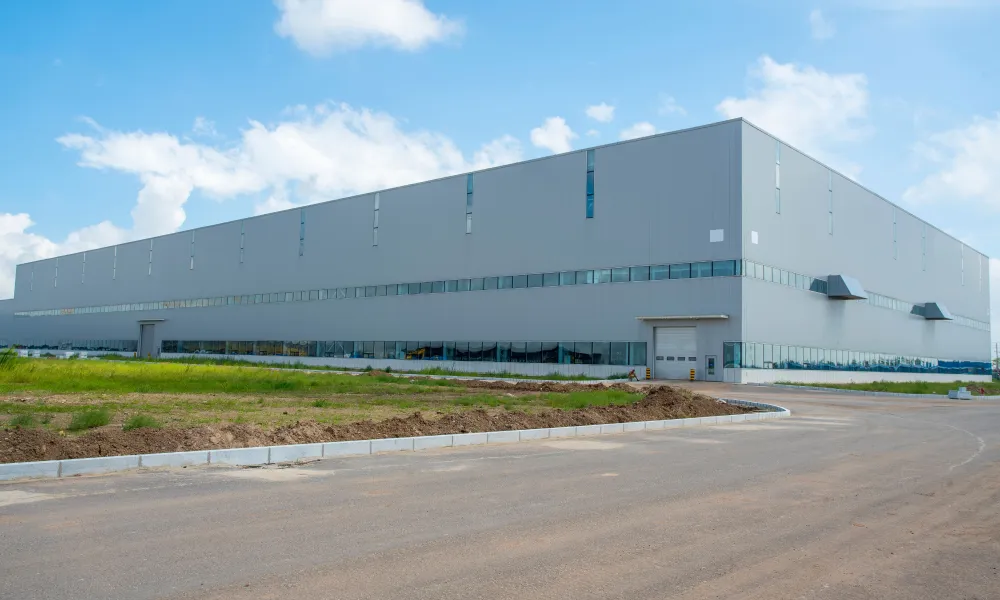
Industrial real estate in Vietnam includes industrial land, ready-built factories (RBF), ready-built warehouses (RBW), and specialized facilities like data centers and semiconductor plants. It serves manufacturing, logistics, warehousing, and R&D tenants.
Each industrial real estate type has unique physical characteristics and infrastructure requirements that make them suitable for particular industrial activities in Vietnam’s evolving market:
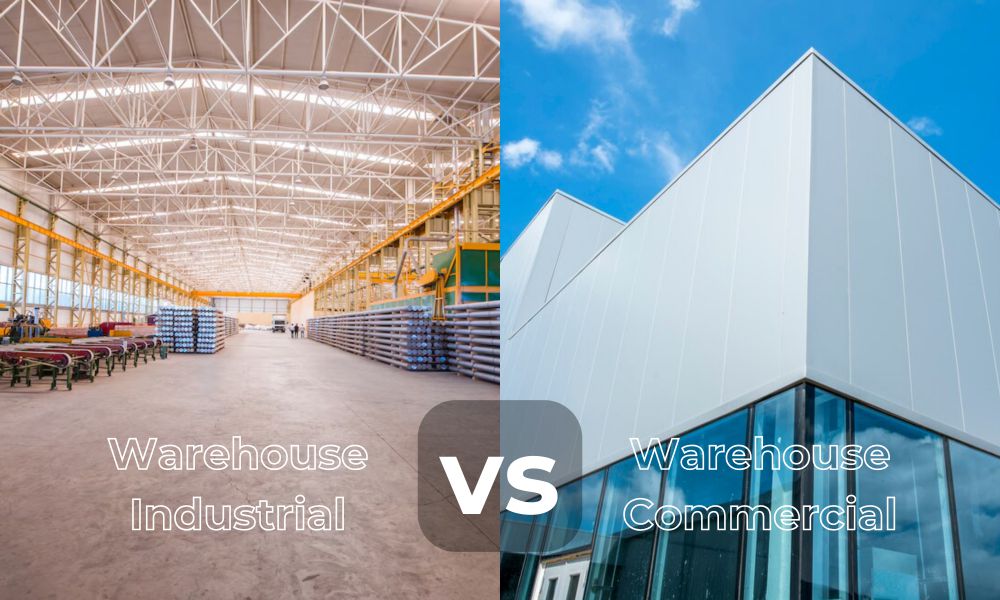
Commercial vs industrial real estate differ fundamentally in their design, functionality, and operational requirements, reflecting their distinct purposes in the business ecosystem.
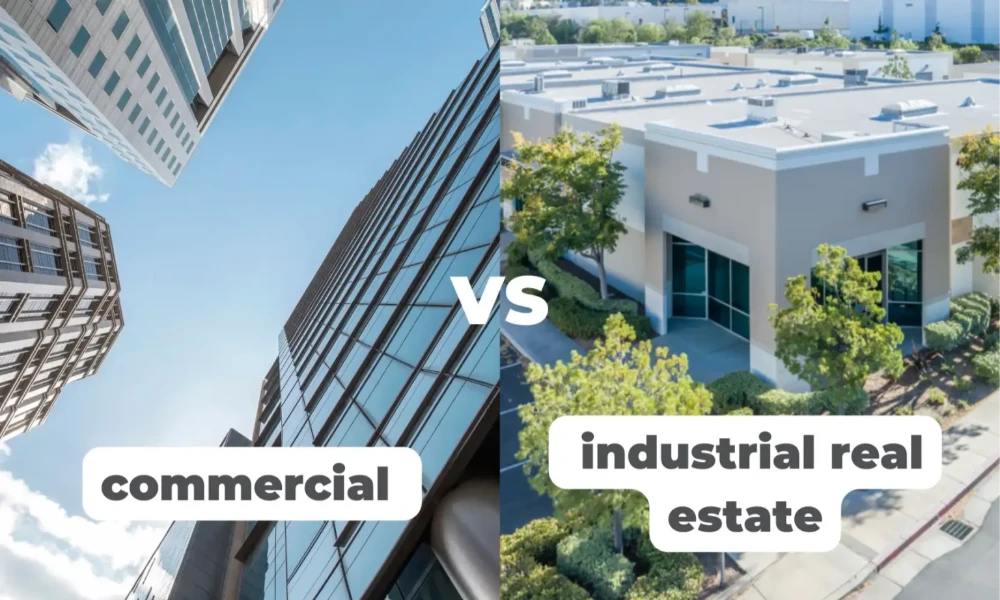
Understanding these key differences helps investors and occupiers make informed decisions that align with their business objectives and investment strategies.
| Difference Category | Commercial Real Estate | Industrial Real Estate |
| Property Characteristics | Emphasis on visibility, aesthetics, foot traffic. Grade A office reaches $7,300/m² asking price HCMC Q1 2026 | Emphasis on efficiency and functionality. Modern RBW clear height 10-12m, automation-ready floors, PCCC fire safety certification, EIA compliance |
| Lease Terms | Office leases typically 3-5 years, retail 5-10 years, hotel 20-30+ years (owner-operator) | Industrial land lease up to 50-70 years (foreign investor), RBF/RBW leases 3-5 years standard with 1-3 year flex options |
| Tenant Types | Retailers, corporate offices, F&B operators, medical facilities, service providers | Manufacturing FDI (electronics, semiconductors, EV, high-tech textiles), logistics/3PL, e-commerce fulfillment, data center operators |
| Regulatory and MEP Requirements | Standard fire safety, building code compliance | PCCC (fire safety) certification, EIA/ĐTM (Environmental Impact Assessment), industrial power infrastructure (high-voltage substations, backup generation), water treatment, hazardous waste protocols |
| Location & Environment | Urban core (Q1 HCMC, Hoan Kiem/Ba Dinh Hanoi, Da Nang beachfront) | Concentrated in industrial corridors: Northern (Bac Ninh, Hai Phong, Hung Yen), Southern (Binh Duong, Dong Nai, Tay Ninh Province post-merger, Long An), Central (Da Nang, Quang Nam). Proximity to seaports (Lach Huyen, Cai Mep), airports (Long Thanh operational H1 2026), and expressway networks |
| Safety Risks | Although there are often fewer safety hazards in commercial buildings than in industrial construction, safety precautions are nevertheless necessary to safeguard employees and the public. | Safety is important to reduce the risk of high voltages, chemicals, heavy machinery, and potentially hazardous materials. |
| Typical Yield | Office 5-6%, retail 6-7%, hotel 7-9% | Warehouse/factory 7-9%, land lease 8-10% |
| Capex Requirements | Fit-out only for office/retail; ground-up development for hotel/mixed-use | Fit-out for RBF/RBW; ground-up for BTS/data center |
The traditional divide between commercial and industrial real estate no longer holds in Vietnam 2026. Three structural trends are reshaping how investors and occupiers should think about asset classification, and each has direct implications for underwriting, tenant sourcing, and long-term portfolio strategy.
Modern industrial zones in Vietnam have moved well beyond the traditional model of standalone factories on serviced land. The current generation of parks integrates Grade B office towers, R&D flex buildings, retail podiums, and even serviced apartments for expatriate management staff into a single master-planned footprint.
VSIP III in Binh Duong (now part of Ho Chi Minh City after the July 2025 provincial merger) represents this model at scale, combining a 1,000-hectare industrial base with commercial support infrastructure, including office space, logistics services, and worker accommodation. Serviced industrial parks with integrated legal, HR, and licensing support add another commercial layer, transforming the tenant relationship from landlord-tenant into something closer to a hospitality contract.
For occupiers, this convergence means one lease can now cover manufacturing, R&D, back-office administration, and even client-facing showrooms. For investors, mixed-use industrial parks deliver blended yield profiles that no traditional single-asset-class model captures.
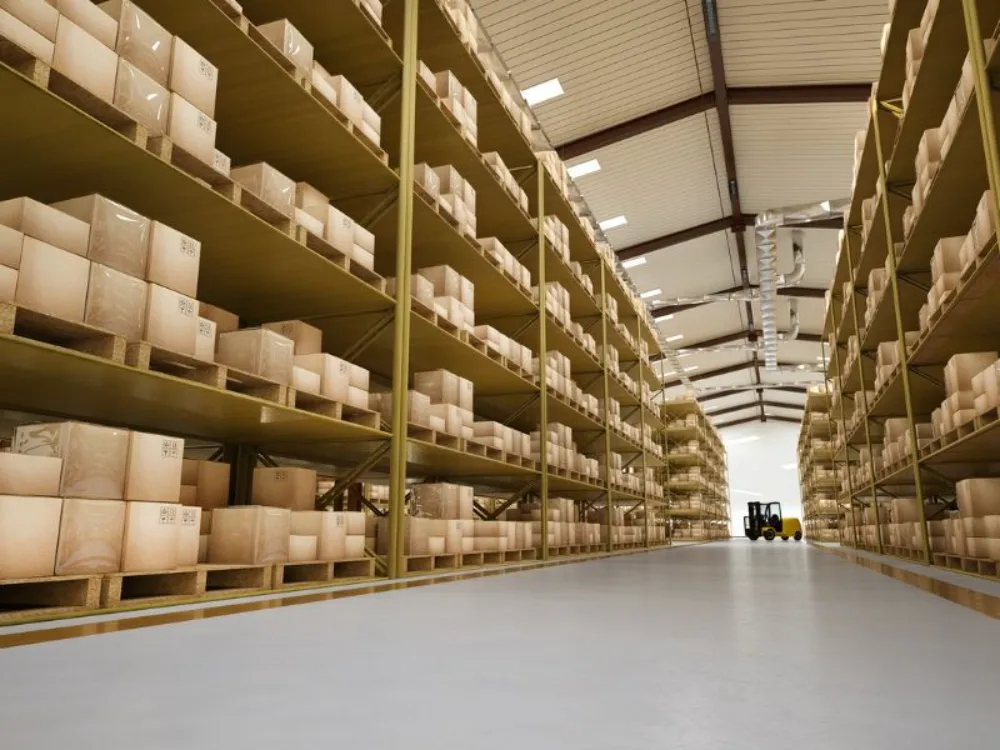
Urban micro-warehousing under 5,000 square meters is the clearest example of the classification breakdown. These facilities require industrial specifications (reinforced floors, dock doors, 8-12 meter clear heights, and cold chain capability for grocery e-commerce) but sit in commercial locations (urban infill sites within a 30-45 minute delivery radius of Ho Chi Minh City and Hanoi consumer bases).
The tenant profile complicates classification further. Shopee, TikTok Shop, and Lazada operate fulfillment infrastructure that looks industrial in specs but functions as commercial retail infrastructure. It is the last mile of an e-commerce transaction rather than a manufacturing input. Third-party logistics operators serving these platforms lease space on rental structures closer to commercial retail (shorter terms, tenant improvement allowances, and faster negotiation cycles) than to traditional industrial land leases with 30-50 year horizons.
Investors underwriting these assets need to blend two frameworks: warehouse specifications on the physical side and retail-adjacent lease economics on the financial side.
Data centers physically resemble the most demanding industrial facilities: 60%+ site coverage, high-voltage power infrastructure at 20-50 MW capacity per site, industrial cooling systems, and minimal parking or human occupancy. Vietnam’s data center capacity is projected to reach 950-1,000 MW by 2030, driven by AI workloads, cloud services, and Personal Data Protection Law data localization requirements effective January 2026.
But data center lease structures are commercial through and through. Contracts typically run 10-15 years on triple net terms with corporate tenants including Viettel, VNPT, FPT, and CMC on the domestic side, plus global operators entering the market under the 100% foreign ownership framework opened in January 2025. Rents are quoted per kilowatt-month rather than per square meter, reflecting the power-density economics that define this asset class.
The result is a category that appears in industrial park masterplans but underwrites like a specialized commercial asset, closer to a REIT-grade office building than to a bulk warehouse in yield stability and tenant covenant quality.
Asset classification alone no longer predicts performance in Vietnam 2026. A “commercial” fulfillment center and an “industrial” fulfillment center can share identical specs, identical tenants, and identical rental economics. A “commercial” data center and an “industrial” data center are the same asset viewed through different lenses.
For investors, this means underwriting must start from the tenant and use case rather than the asset label. Yield spreads, tenant covenant quality, lease duration, and capex requirements now vary more within categories than between them. A Grade A office in a mixed-use industrial park may deliver stronger fundamentals than a standalone urban office building, and an urban micro-warehouse may outperform a suburban Grade A office on both yield and occupancy.
For occupiers, the practical implication is that site selection should ignore traditional commercial vs industrial framing and instead focus on operational fit: proximity to demand, workforce access, power and connectivity capacity, and regulatory alignment. The best facility for e-commerce fulfillment may sit in a commercial zone; the best facility for R&D may sit in an industrial park.
Choosing between commercial vs industrial real estate sectors comes down to aligning your specific financial goals, risk appetite, and operational needs with the right asset class.
For the Growth-Oriented Investor: If your strategy focuses on capitalizing on macroeconomic shifts like the “China plus one” strategy and the e-commerce boom, industrial real estate is your ideal match. This profile thrives on the sector’s 80%+ national occupancy rates and rental growth trending 5-8% YoY in prime industrial hubs. We recommend targeting modern ready-built factories or logistics warehouses in Northern or Southern corridors, particularly those with green certifications that attract premium high-tech FDI tenants.
For the Stability-Seeking Income Investor: If you prioritize predictable, long-term cash flow and lower tenant turnover, commercial real estate is the stronger fit. This profile benefits from the sector’s extended lease terms, such as 5 to 10 years in retail, which provide a reliable income anchor. The most actionable move here is investing in Grade A, green-certified office spaces or mixed-use retail podiums in prime urban cores, where ESG-focused corporate tenants command higher rents for LEED-certified or Green Mark-certified assets.
For the Strategic Diversifier: Most sophisticated investors don’t choose just one. Blending both sectors allows you to use commercial assets as a stable, income-generating foundation while deploying industrial assets for higher capital growth potential.

At Savills, we know that your investment strategy is uniquely yours. That is why we do not offer one-size-fits-all solutions. With our proprietary Savills market intelligence dashboard and 30 years of Vietnam industrial market experience, we match your specific investor profile with precision-targeted opportunities, whether that means sourcing a high-yield industrial site or securing a premium commercial asset with long-term lease structures.
If you’re looking for property investment opportunities in Vietnam, don’t hesitate to contact us today.
Understanding commercial vs industrial real estate is essential for making informed investment decisions in Vietnam’s dynamic property market.
Yes, commercial real estate in Vietnam includes industrial real estate. Both are properties used to generate profit or conduct business, rather than for living.
In 2026, industrial real estate is the stronger performing sector in Vietnam. Driven by manufacturing and the “China plus one” strategy, it features higher occupancy rates from 80-85% in 2025 and steady growth. In Southern Vietnam, occupancy exceeds 90%. Commercial real estate is healthy but is undergoing recalibration toward assets with high yields, occupancy remained around 90% mostly in major cities.
Foreign investors cannot directly own land in Vietnam because the State owns all land. Instead, they can obtain Land Use Rights (LURs) or lease property. For commercial and industrial real estate, foreign businesses can lease land from the State, buy buildings, or sub-lease in industrial zones.
Commercial rents vary significantly by type and location: Ho Chi Minh City & Hanoi CBDs command $55 to $90 per square meter monthly for ground-floor retail space, while premium green offices average $40 to $60 per square meter monthly.
Industrial rents include ready-built warehouses at $2 to $6 per square meter monthly (Northern Vietnam averages around $4.90 per square meter monthly), and industrial land lease prices ranging from $70 to over $280 per square meter depending on the region.