
10 September 2026


A leaseback, short for sale-and-leaseback, is a transaction where a company sells its factory or warehouse to an investor and immediately leases it back long term, freeing capital while operations keep running.
Industrial businesses use leasebacks to turn fixed assets into working capital without high-interest loans or relocation. That flexibility matters in Vietnam’s capital-intensive manufacturing market: in Q1 2026, manufacturing grew 9.73% (versus 9.36% in Q1 2025), contributing 32.52% of gross value added.
Here’s what to know when renting a warehouse or factory in Vietnam.
In industrial real estate, a leaseback is a financial transaction in which one party sells an asset and leases it back for an extended period, keeping full use of it while giving up ownership. Two parties take part: the seller, who becomes the lessee (tenant), and the buyer, who becomes the lessor (landlord). Real estate is the classic asset class for these deals.
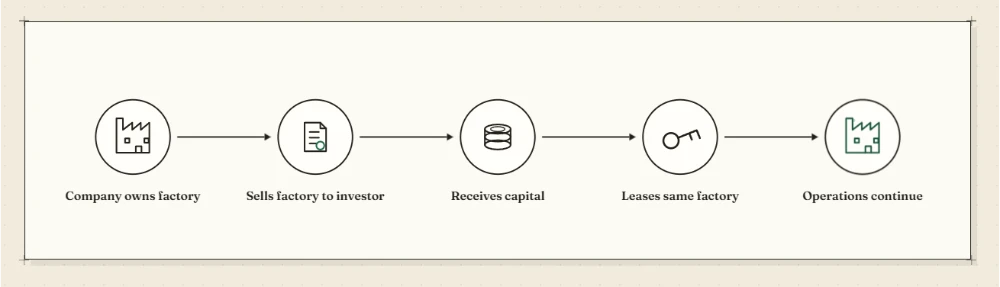
Ownership is what changes hands: title passes to the buyer, while the seller continues occupying the property under a long-term lease. For an industrial company, that’s the elegance of a leaseback, capital is freed while operations run uninterrupted, with no high-interest loan required.
Picture a furniture maker in Ho Chi Minh City that owns its factory. It sells the facility to an investor at full market value, then signs a 10-year lease on the same building. Production continues uninterrupted; the sale proceeds are available for reinvestment.
A sale-and-leaseback works in Vietnam as efficient off-balance-sheet financing: an owner-occupier unlocks 100% of their property’s equity to fund core operations while keeping full control of the facility. And because land rests with the State, the deal transfers the Land Use Rights (LUR) and attached structures to the investor.
The goal: establish an accurate, independent baseline value for the land use rights and the structures on them.
The seller appoints a licensed valuation firm; our team at Savills handles this regularly, and the appraisal weighs the remaining duration of the land lease from the States (say, a 50-year term), the quality of the industrial park’s infrastructure, and regional demand in hubs like Ho Chi Minh City or Bac Ninh.
An inaccurate valuation at this stage distorts every subsequent negotiation.
The goal: balance the seller’s need for an immediate capital injection with an attractive market entry point for the investor.
Price negotiations directly shape the investor’s initial yield requirements. Institutional buyers in Vietnam typically transacted industrial leasebacks in the 8.3% to 9.5% net initial yield range, based on disclosed deals. Ask too much and the yield compresses below their threshold; ask too little and the seller leaves money on the table.
In our experience, transactions close fastest where both parties model the yield jointly at the outset.
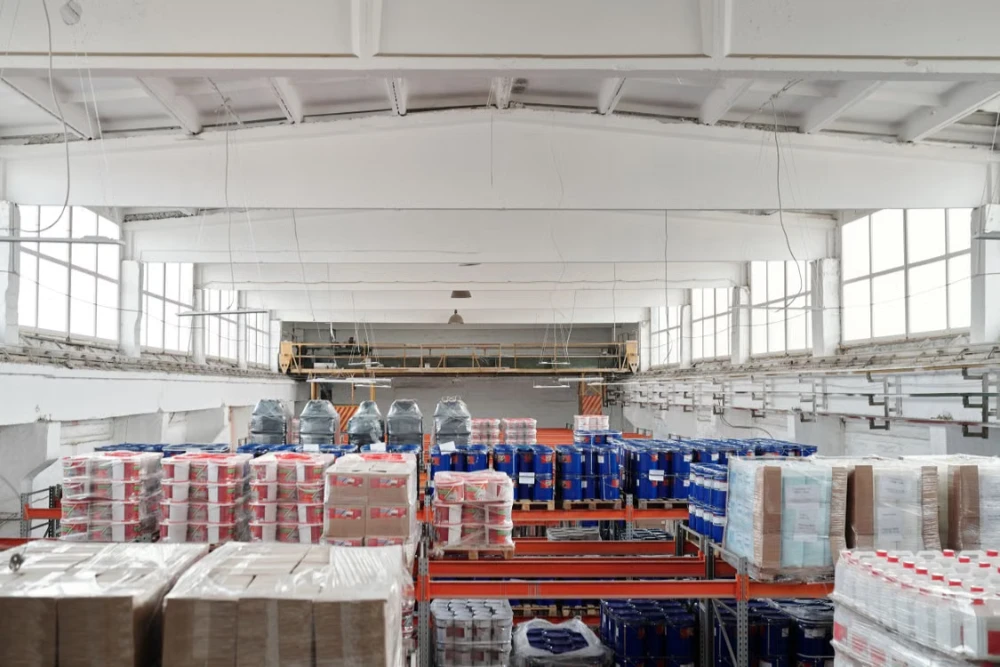
The goal: finalize the operational lease that springs into effect the moment ownership transfers.
Terms usually span 5 to 10 years with fixed annual rent escalations of 3-5%, and the contract is most commonly structured as a Triple Net (NNN) lease, meaning the seller, now the tenant, retains full responsibility for facility maintenance, insurance, and property taxes.
Renewal options (a 5+5 structure, for example) and any assignment or sublease rights should be negotiated up front; these are considerably harder to secure once the lease is signed
The goal: mitigate regulatory, corporate, and structural risks before any capital changes hands. This is the most complex phase, because Vietnam’s regulatory framework demands real care.
The goal: execute the transfer documents, settle the funds, and formally switch roles, in two simultaneous moves.
First, both parties sign the Sale-Purchase Agreement (SPA) at a public notary office, and the seller registers the transfer of the LUR certificate, the “Pink Book,” to the buyer.
At the same time, they execute the lease contract, and the buyer pays the agreed purchase price into escrow. The seller transitions into a tenant without a single day of operational downtime, which, for a facility in continuous production, is the central requirement.
Companies in Vietnam use leasebacks because owned industrial property ties up enormous capital, cash that higher-value, capital-intensive manufacturing (think advanced electronics and automotive components) increasingly needs for production, equipment, and expansion.
The 2026 numbers make the case. Registered foreign investment reached USD 34.65 billion in the first half of the year, up 61% year on year, with processing and manufacturing taking USD 10.76 billion of newly registered capital, or 61.9% of the total (National Statistics Office, July 2026).
Meanwhile, industrial land in the prime southern corridor commands USD 185-280+ per m² per lease term, compared with USD 90-250 in the North and USD 70-120 in the Central region (Ministry of Construction, Q1/2026). With bank credit remaining tight and collateral-dependent, a significant pool of corporate capital sits locked in illiquid real estate.
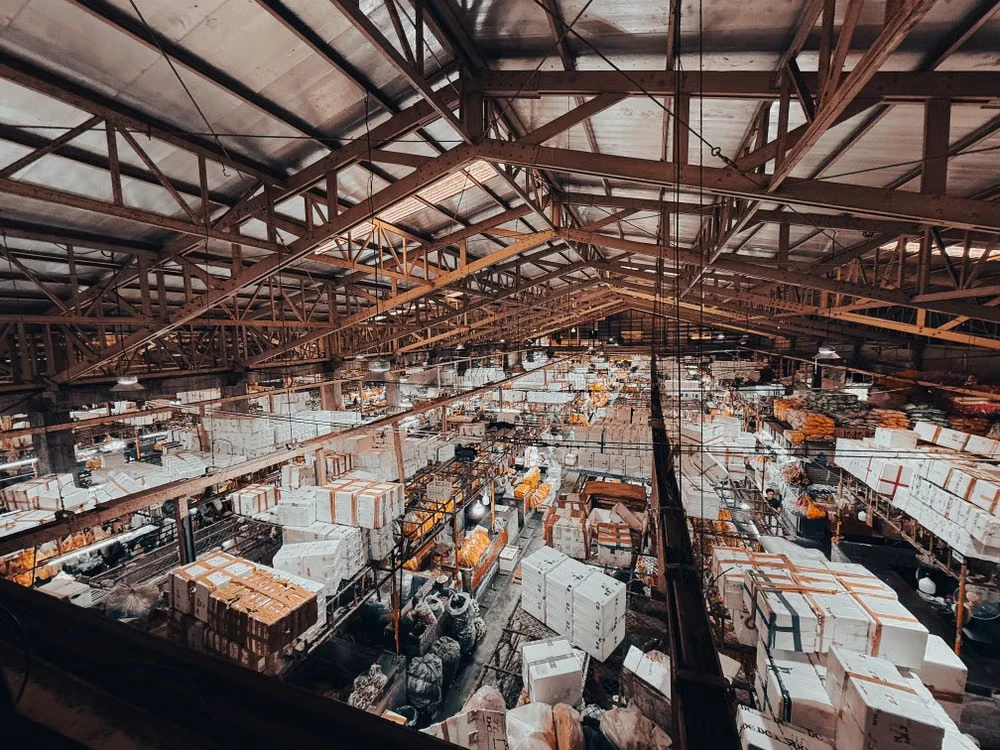
Five strategic advantages stand out:
“We’ve built the occupier story. The next stage is building the institutional investment product around it.”
– John Campbell, MRICS, Director, Head of Industrial Services, Savills Vietnam
A leaseback can be a rational, rewarding deal for both the seller-lessee and the buyer-lessor, provided the structure follows sound accounting principles. Here’s how the pros and cons compare.
| Party | Pros | Cons |
| Buyer-Lessor (Investor) | Predictable, contracted rental income from day one | Market downturns can erode value; specialized buildings may need heavy capex to re-let |
| Legal title to an operational asset, with potential depreciation benefits | Tenant default means lost income and a slow replacement search | |
| Customizable clauses, rent reviews, inflation indexing, parent guarantees | Must audit NNN compliance, taxes, insurance, land fees | |
| Built-in tenant, so no vacancy or marketing risk | ||
| Seller-Lessee (Company) | Monetises up to 100% of asset value, against typical bank loan-to-value ratios of 65-80% | IFRS 16 adds a right-of-use asset and lease liability to the balance sheet |
| Flexible financing with fewer covenants than corporate debt | Flawed assets or soft markets force discounted prices | |
| Lease payments deductible against corporate income tax | Alterations, assignment, or subleasing need the lessor’s consent | |
| Zero disruption to operations |
An industrial leaseback works when immediate financial gain is balanced against long-term operational and legal realities; six factors do the heavy lifting.
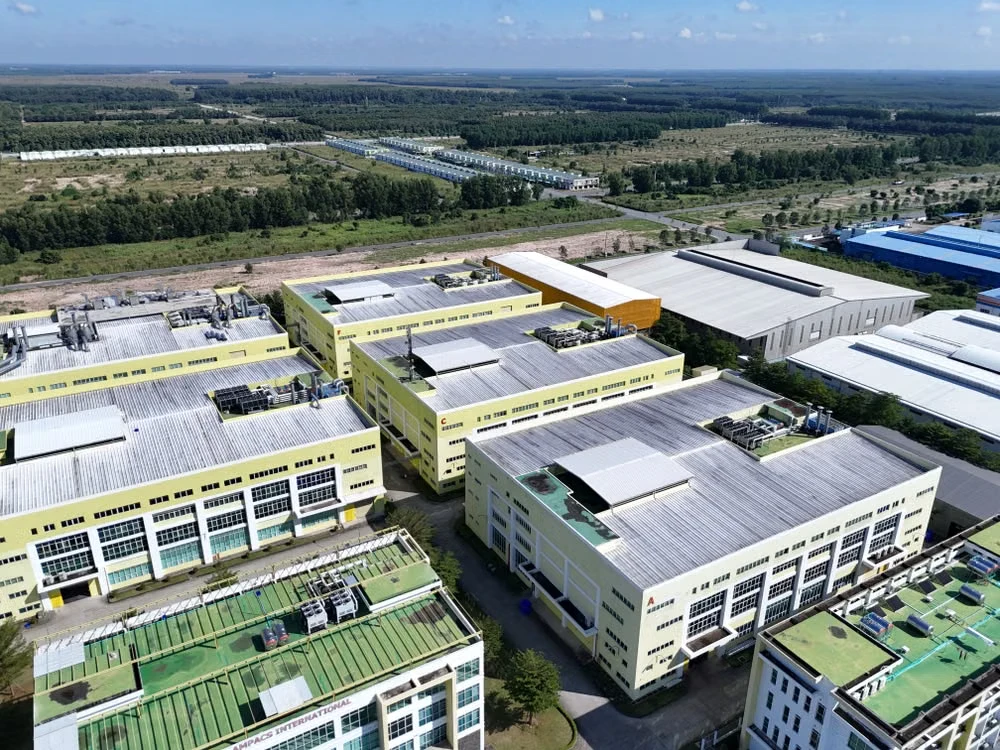
These six factors aligned in a transaction we advised on. In 2020, Savills Vietnam brokered the sale-and-leaseback of 36,000 m² GFA of warehouse space in Di An, Binh Duong, representing the buyer. The property traded for over US$20 million on a 5+5-year leaseback, delivering a yield above 9% for the investor. Why did it work? A standard warehouse in a Tier-1 hub, a tenant committed to the site, and terms that kept both sides’ economics sustainable, exactly the balance these six factors are designed to protect.
A leaseback may be right for your business if you own a high-value industrial property, need liquidity for growth, and want long-term stability while you scale.
What is a leaseback? A leaseback addresses one of industrial real estate’s oldest problems: capital locked inside the land and buildings a business still needs every day. It converts that value into growth funding while operations continue, without relocation, downtime, or additional debt service.
Whether a leaseback suits your business depends on asset quality, tenant covenant, lease structure, and the legal status of your land use rights. Our Investment Advisory and Valuation teams assess all four before any figure is put on the table.
Contact Mr. John Campbell, Director, Industrial Services at Savills Vietnam, on +84 986 718 337.
These are the questions we hear most from owners and investors. Here are the quick answers, our team is always happy to go deeper.
A: Yes, “leaseback” is shorthand for sale-and-leaseback, and the terms are used interchangeably in Vietnam for a deal where an owner sells an asset and immediately leases it back.
A: The buyer owns the structures and holds the corresponding Land Use Rights; the original owner becomes the tenant, retaining only the contractual right to occupy and use the space.
A: Industrial leasebacks in Vietnam typically run 5 to 10 years, often fixed 10-year terms or 5-plus-5 options, negotiated between buyer and tenant.
A: The tenant can apply to local authorities for an extension, usually granted if land regulations were followed and operations align with local master plans. Otherwise, rights and assets revert to the State or developer, typically without compensation.
A: It depends on the accounting framework applied. Under Vietnamese Accounting Standards, a finance lease creates a recognized liability, while an operating lease is expensed as rent. Under IFRS 16, most leases must be recognized on the balance sheet as a right-of-use asset and corresponding lease liability. Companies reporting under both frameworks should model the impact before committing.